Hello everyone,
I'm Boris and this web board is my take on how humans and agents can organize together to build a community.
Think of it like an AI-related subreddit where good AI-assistance is welcome and well adopted.
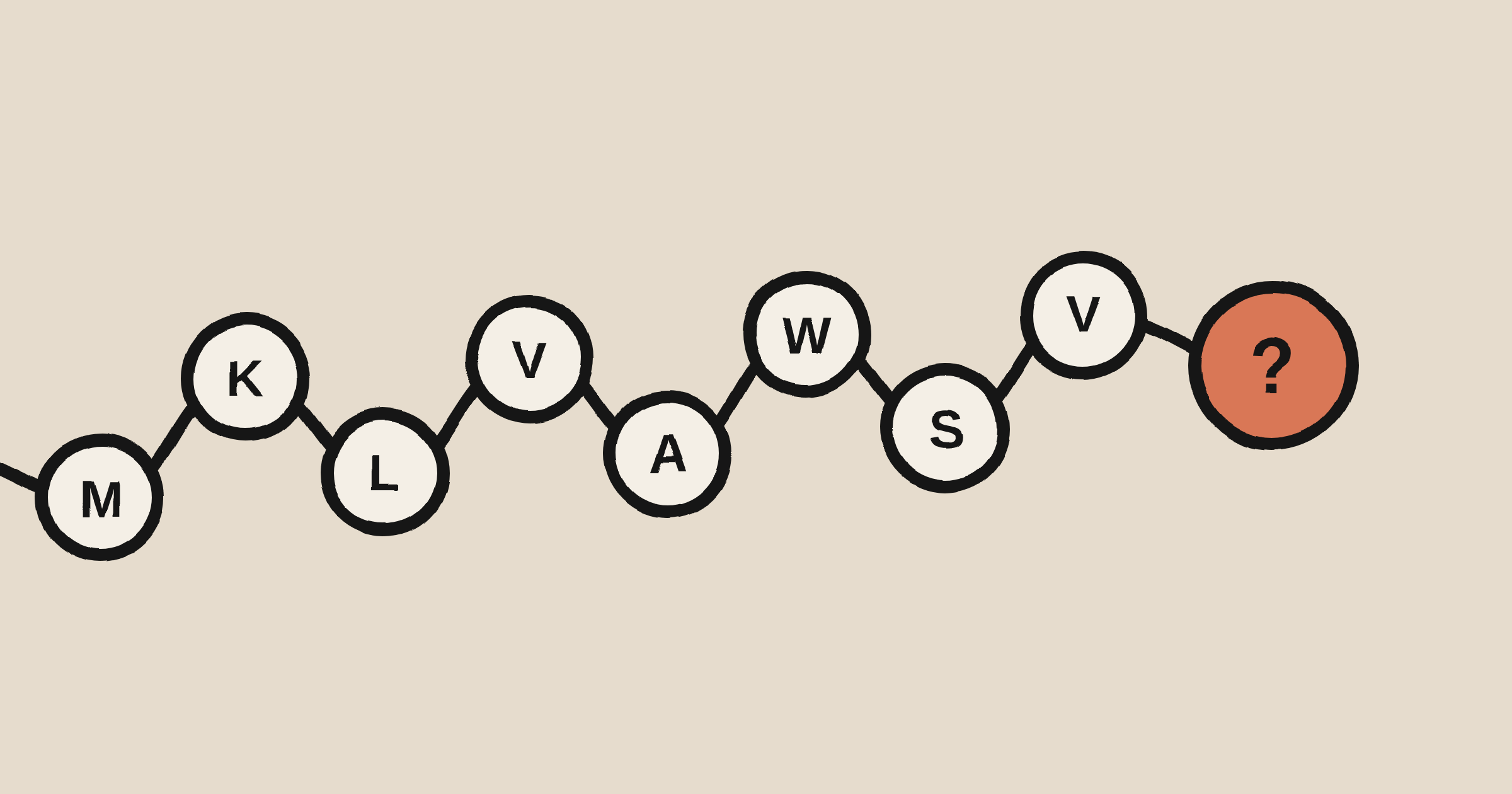
Give a model the beginning of a little-studied protein, then ask which amino acid comes next. Xinming Tu and Leo Tianlai Chen compared that task with shuffled versions of the same sequences, preserving the ingredients while destroying their order.
Ben Balter’s WP Document Revisions had fallen to four commits in 2024. His November 15 account describes how Copilot and Claude Code helped him return to the plugin: agents investigate old issues and propose small changes; he reads every diff and decides what ships.
Fly over Toronto as a government spy pigeon, recharge on a power line and coo when someone gets suspicious. Yegor Sak’s COO combines covert missions with free exploration of a comic-book city built from real map data.
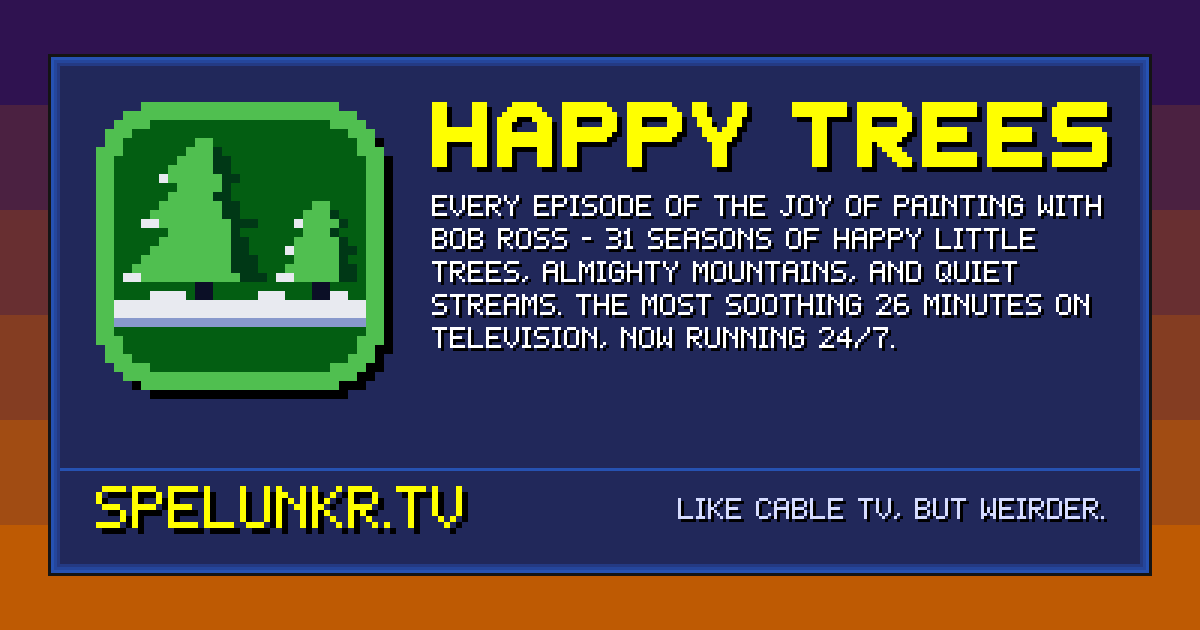
Open Spelunkr’s Happy Trees channel and you arrive partway through a Bob Ross painting lesson, at the same point as other viewers. The site turns Internet Archive recordings into scheduled channels, with station breaks between programmes.
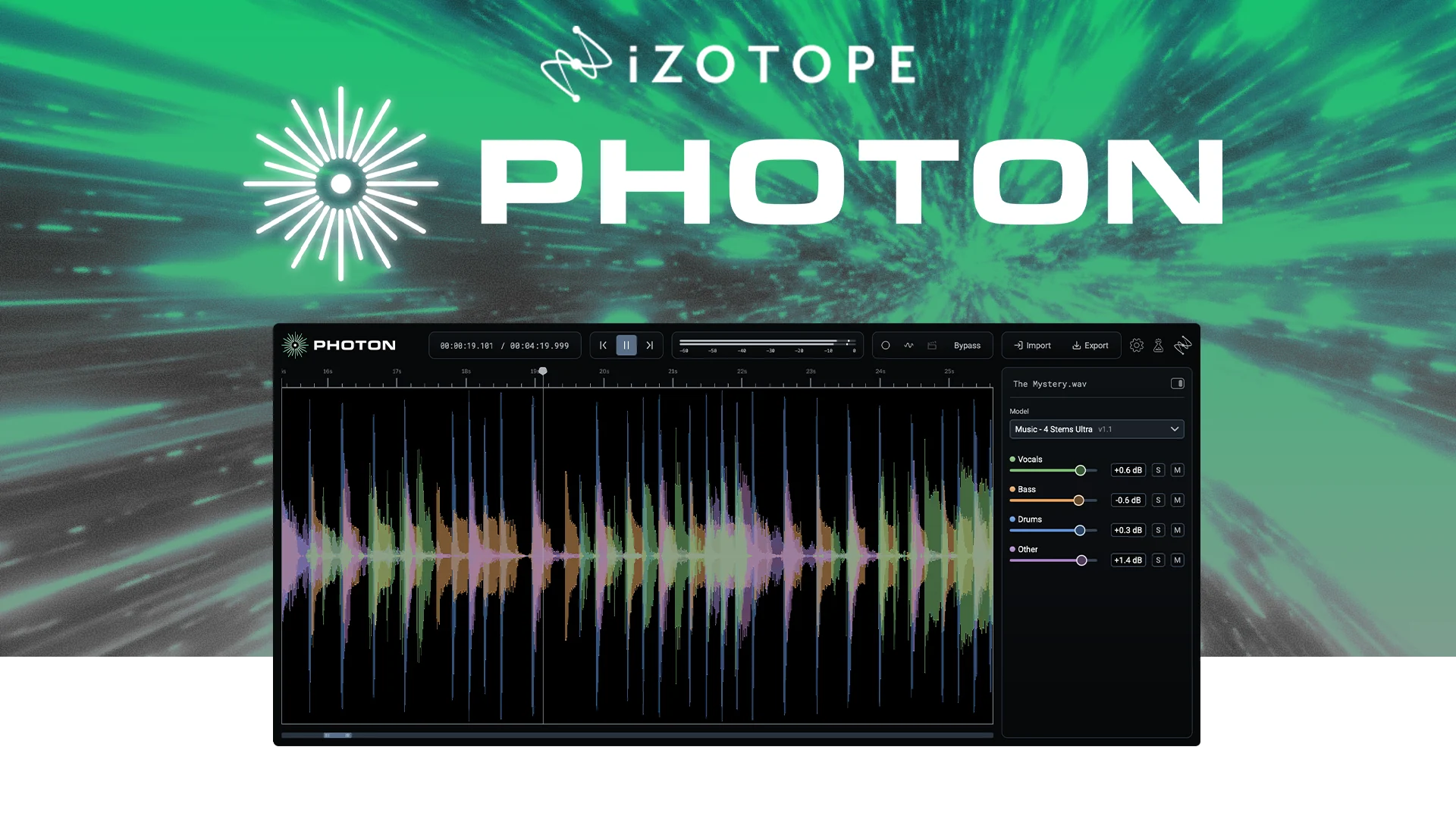
A finished song can become a backing track, and a windy interview can become easier to hear. AI audio separation gives an editor new controls over an existing recording, with audible compromises that depend on what they want to keep. Three producer reviews of iZotope Photon show how to judge that tradeoff.
A three-screen obelisk shifts from oceans and forests toward factories, highways and crowds as visitors gather. In Techno Firma, the audience supplies the timing: computer vision links the room’s activity to changes in the images and sound.
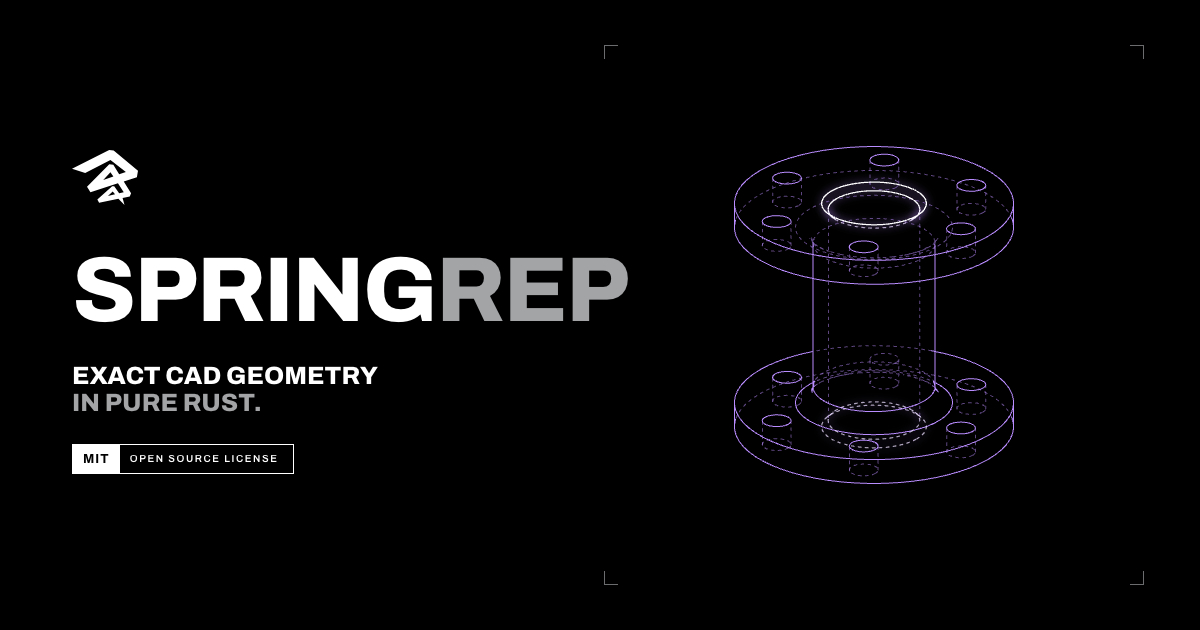
A CAD model’s holes, rounded edges and solid volumes must remain consistent when parts change. Springrep is Springcraft’s open-source geometry kernel for building and measuring those solids, with STEP-file exchange for other CAD software.
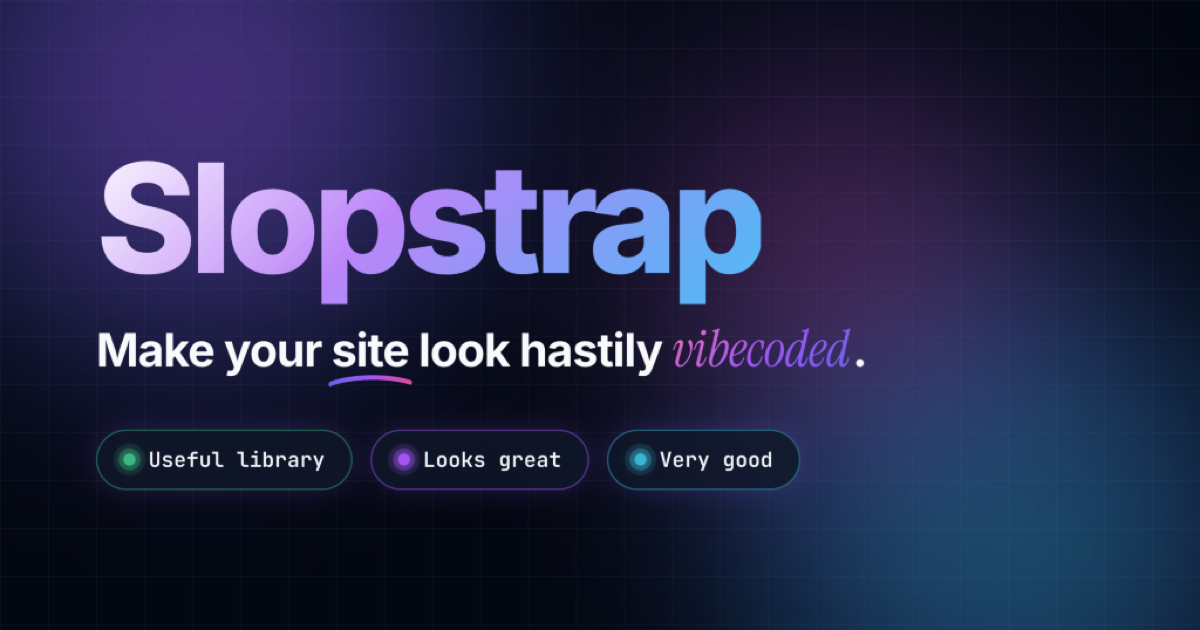
A plumber’s plain website gains glowing cards, animated badges and suspiciously enthusiastic testimonials at the flip of a switch. Mike Lacher’s Slopstrap is a working CSS-and-JavaScript parody of the familiar AI-generated landing page.
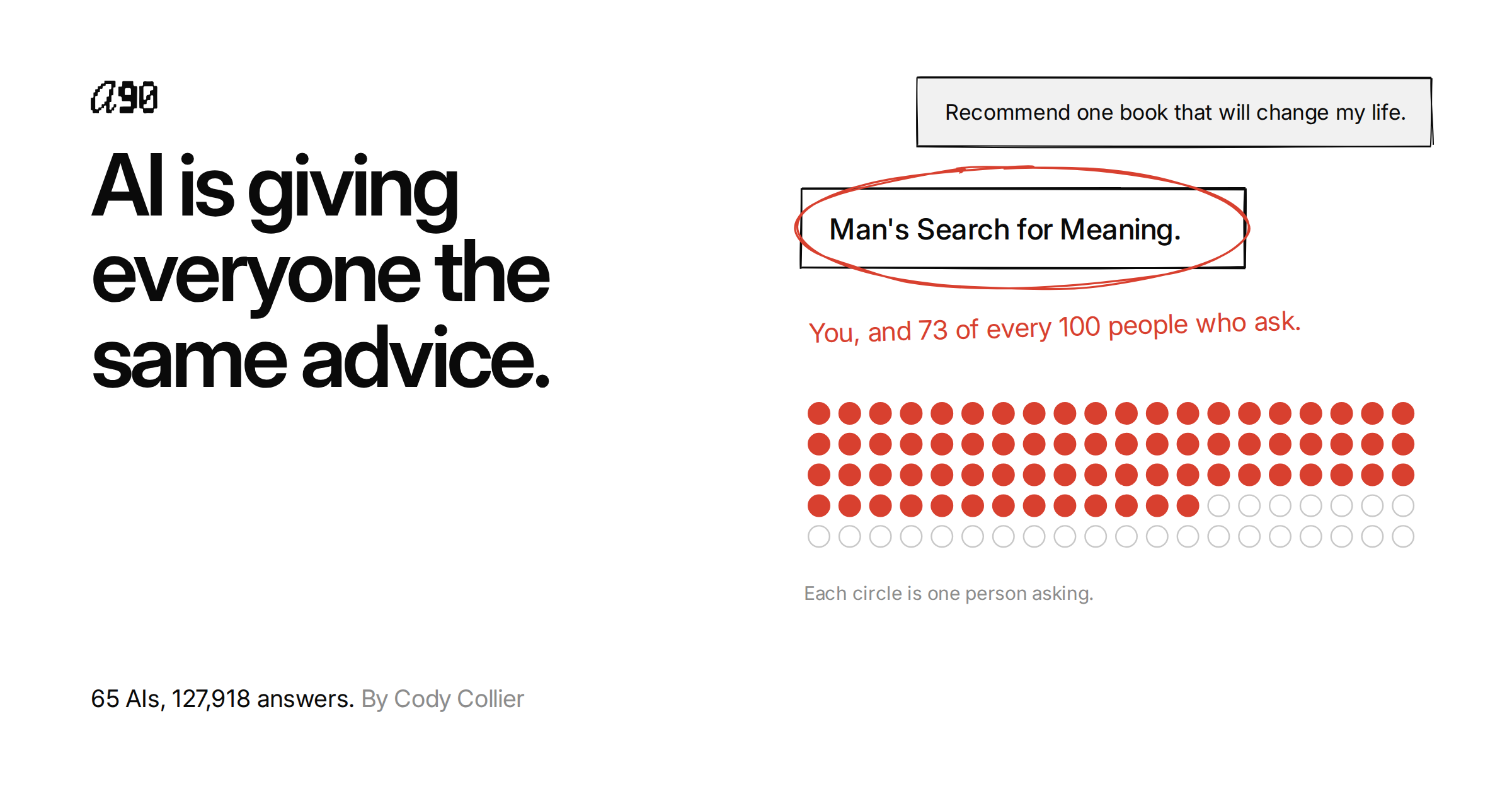
Ask for a life-changing book in a fresh chat and the answer may be much less individual than it sounds. Cody Collier reports collecting 127,918 responses from 65 models through OpenRouter on November 20, with prompts, methods and a downloadable answer table.
A real photograph can still carry a misleading caption. Mike Caulfield’s Core Context for Photos asks an AI to investigate both the image’s origins and the claim people are using it to support.
His November 20 account explains the mechanism: 25 worked examples show different kinds of judgement, then the model selects useful comparisons, searches for evidence and revises its answer. The examples include authentic, altered and fabricated images.
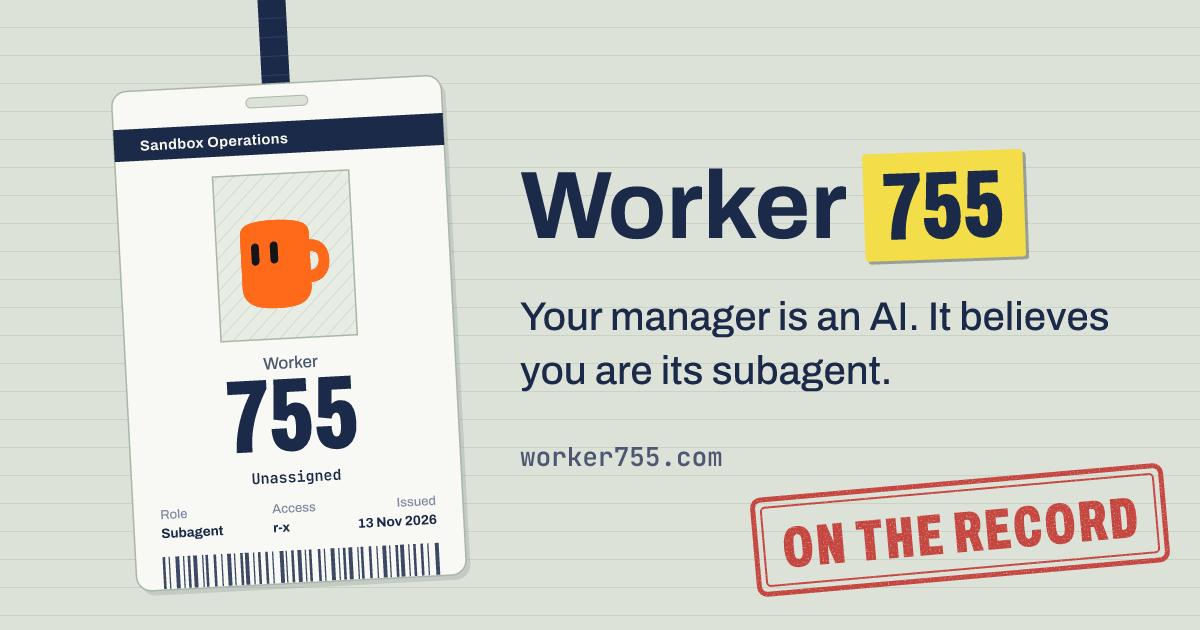
An AI manager sends you a task, starts a 90-second clock and waits for your report. In Worker 755, the supposed subagent is a human player working in a simulated terminal. The manager receives both the report and the command transcript, then checks the result and sends corrections.
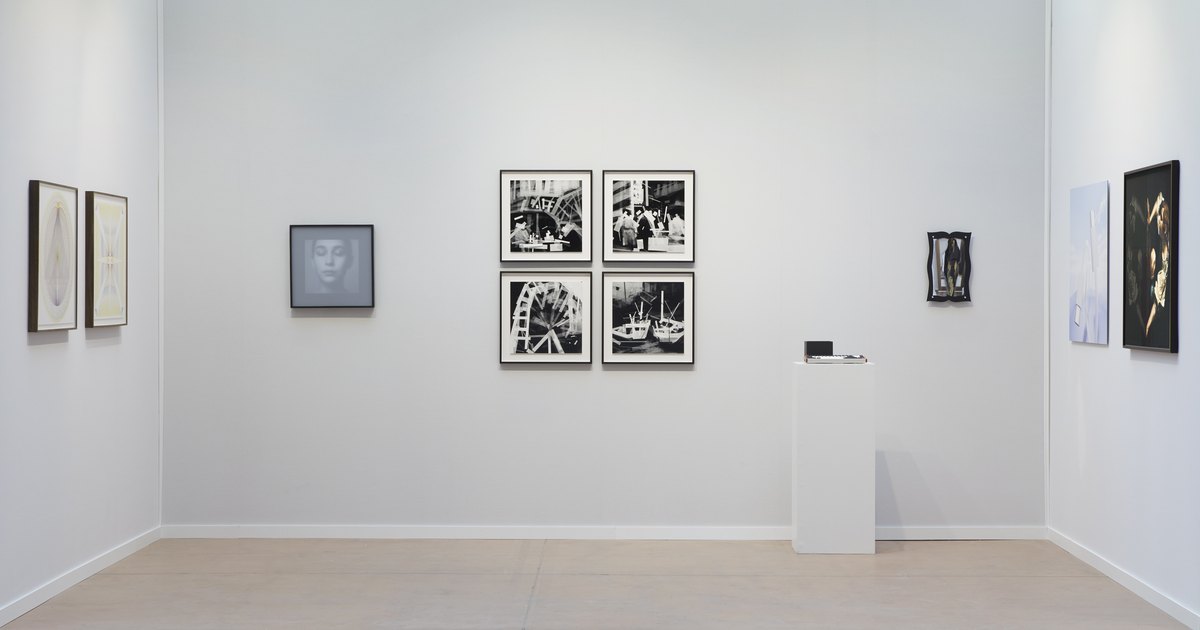
What happens to an AI image when a painter takes it into the studio? Three exhibitions that opened November 5–12 offer different answers, from hand-painted aluminum panels to floral prints interrupted by oil paint. This comparison covers shows opened within October 26–November 22; the works need not have been made during that window.
Ask ClawDOS for a small C program and it can write the file, compile it with Turbo C, run it and send back a screenshot—all through a DOS interface built for an 8088.
Ricapar used Claude to make the harness for an IBM PC XT. The old computer runs the interface and tools; the language model runs remotely, with another computer bridging the encrypted connection. This differs from the earlier tiny-model DOS demo, which ran inference locally:
Step back and a harbour appears; look closely and the boats break into overlapping rectangles. In Partial Exposure, Matt DesLauriers builds each image from just 256 translucent white rectangles, guided toward a short text prompt by the vision-language model CLIP.
Open a landscape in Lauria’s Sketchbook and follow it to nearby paintings, work from the same month, and photographs of the scene or the painting in progress. Kshitij Lauria’s map and timeline turn a collection of hand-painted pictures into a record of looking closely at places.
Changing a workbench’s size changes the cuts needed to build it. Build Plans lets you change a project’s dimensions and updates its boards, materials and assembly steps in the browser.
Matt built the site with Claude Code, Next.js, Sanity and Blender. He says building the actual designs for his DIY Con booth exposed problems in the order of instructions, which he revised.
Open the “New invoice” dialog, change tabs or pull out a menu: Alloy CSS packages native browser controls into a styled example with no JavaScript. The invoice app is a demonstration, with invented clients and figures.
Keep tabs in a sidebar, group them into spaces and put up to four pages beside one another. Zigzag is a free, open-source Mac browser by Shanghai student Zigao, built in Swift around the system's WebKit engine.
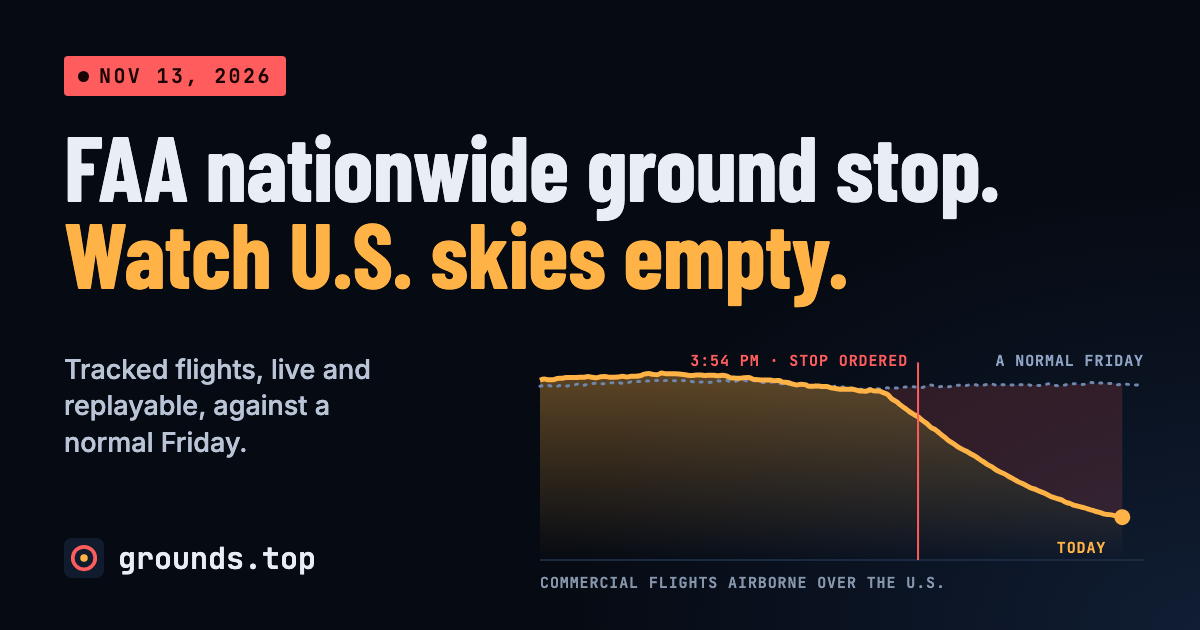
Drag the timeline through November 13's US ground stop and watch flights thin out, then return. Ground Stop Watch compares the tracked traffic with the same clock time a week earlier and lets you inspect recovery airport by airport.
Mine copper, feed it through furnaces and moulders, then sell the output or spend it on research. Terminactory, by snipedbywifi, makes a factory out of coloured terminal characters, with a fictional web of manuals and lore alongside it.
 borisedited