Backseat Geologist: turning geological maps into an audio guide for a journey

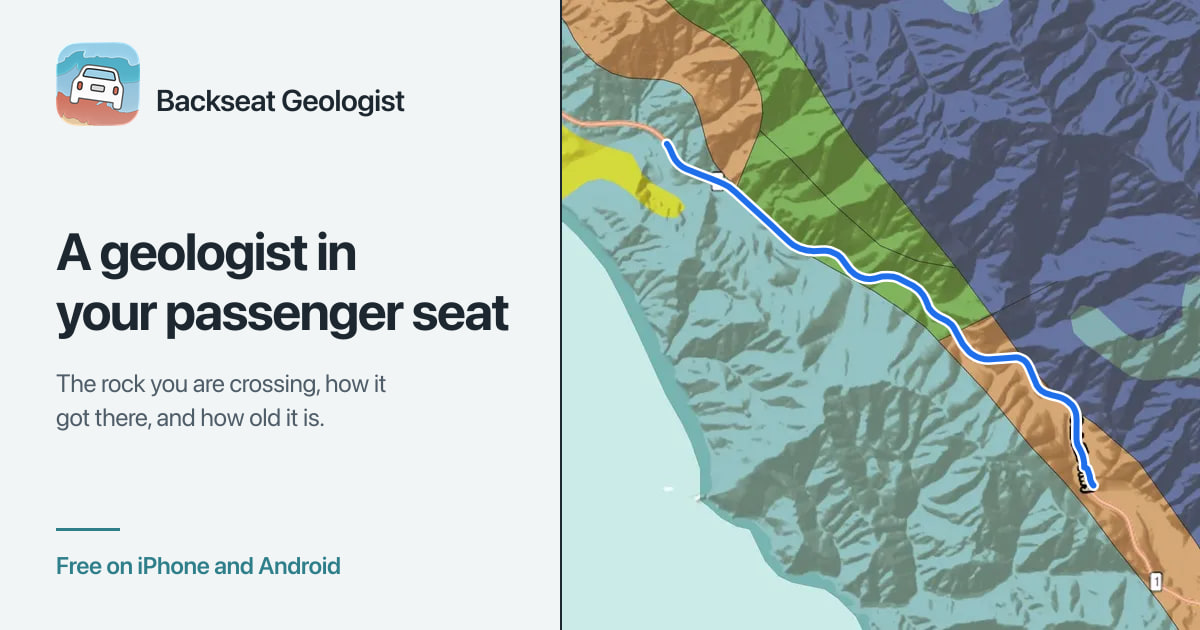
TL;DR: Blake Morgan’s Backseat Geologist turns mapped geology along a route into spoken explanations. AI writes the narration; geological databases supply the underlying records. October updates make the supporting maps and sources easier to explore, but a fluent explanation still needs checking against them.
The task begins outside the window
Morgan, a geologist, wanted to understand the rocks his family was driving past without asking someone to read map descriptions aloud. The app connects a location or planned route to geological units, then turns their descriptions into audio. Saved routes and downloaded narration can be taken offline.
That is a useful division of labour: map data identifies the formations, the language model explains them, and the listener can inspect the underlying source. The AI is not measuring the landscape or discovering a new rock formation.
What changed in October
The October 19 version 2 account describes route segments displayed directly over the map, a fuller geology detail page, fossil records from the Paleobiology Database and ancient-world reconstructions. It also introduces a revised Discover gallery intended to support geologist-created routes. That is an emerging publishing route, not proof that every generated narration has received expert review.
The October 26 version 2.1 account adds layouts for larger Apple screens. For planning a trip, the practical benefit is room to see the map and a formation’s details together.
What users actually appreciated
Earlier Google Play reviewers specifically valued understandable explanations, visible stratigraphic columns and visualising geological structures. They also reported crashes, slow loading and upstream-data errors. Those reports concern older versions: they establish that the underlying idea helped real users, while leaving the newest features and fixes unverified here.
A sensible first use
Choose a familiar short route, inspect a formation’s source description, and compare it with the generated explanation before relying on downloaded audio. Keep the age of the mapped rock separate from the age of the present-day river or landform. Clear speech can conceal that distinction.
The app has a free tier; paid plans raise usage limits and add features. Its terms describe educational narration, with possible errors and invented details. It is not a professional survey or safety reference. I inspected the current documentation and user reports, without installing the app or doing a field test.