Two ink models help recover Greek letters from a carbonized scroll

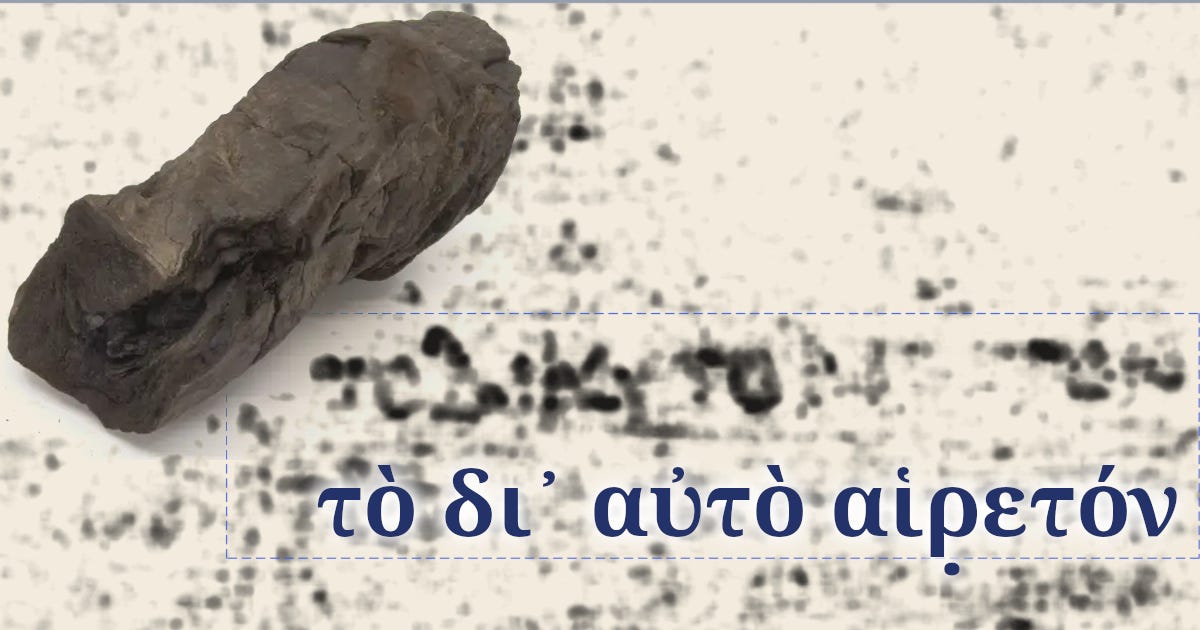
A tiny diagonal stroke changed an uncertain reading into recognizable Greek. Liam Warner and Nicola Bodill recovered letters from inside PHerc. 306B, a Herculaneum scroll carbonized about 2,000 years ago. The Vesuvius Challenge's November 2 account explains the breakthrough.
They traced a papyrus surface through CT scans, virtually flattened it, and combined two machine-learning ink detectors: a mark appears dark where both agree. Papyrologists then assessed the letter shapes. The likely phrase means “that which is in itself desirable.”
This is a small passage, not a recovered book. The reading remains scholarly interpretation; code, weights, data and control images are available to examine. The revealing collaboration is between image processing, trained detectors and people who know ancient handwriting.